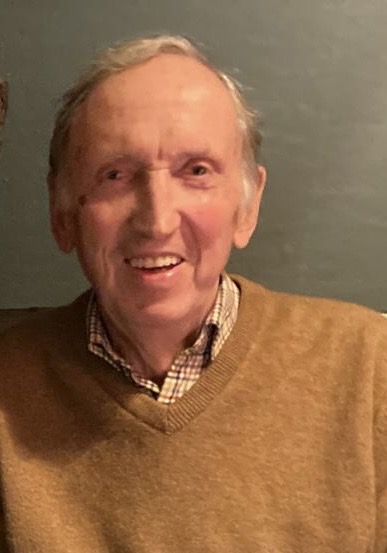
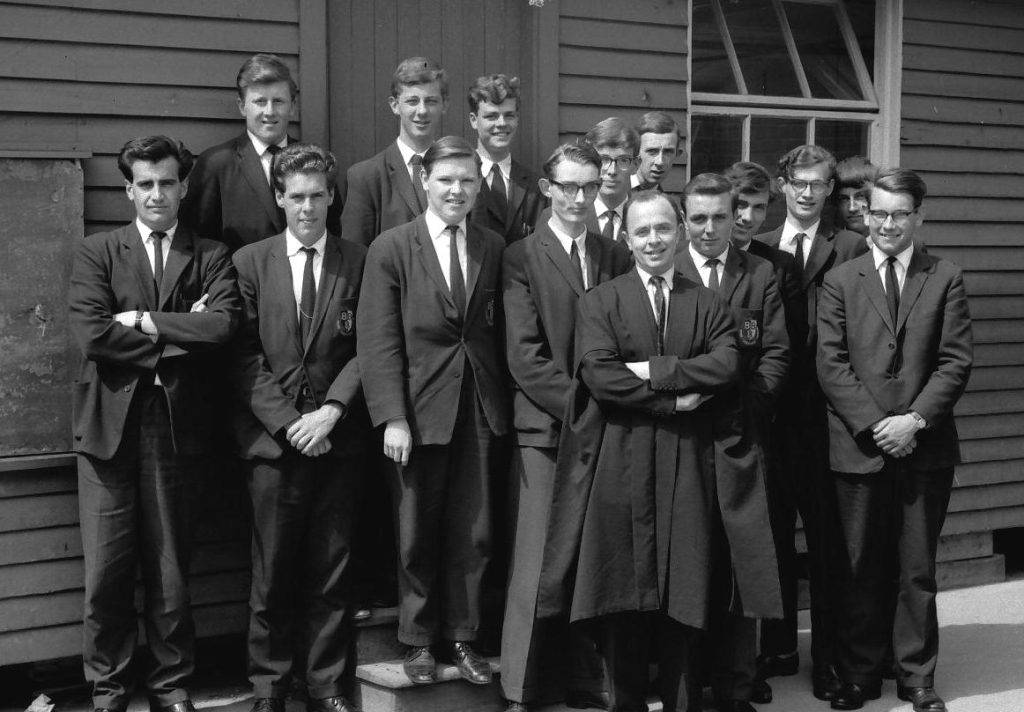
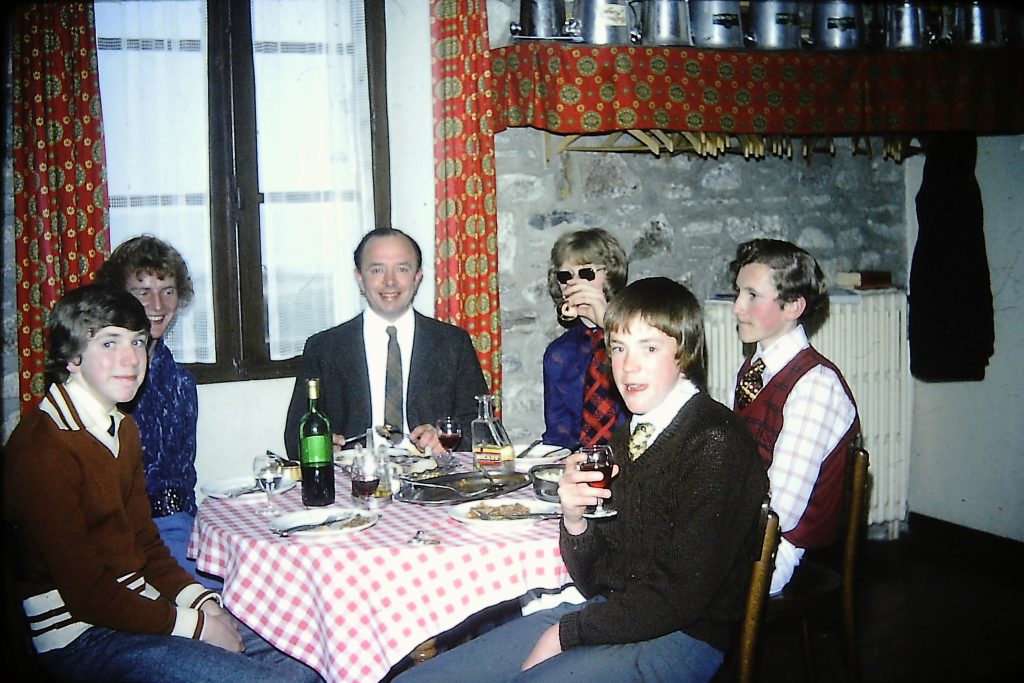
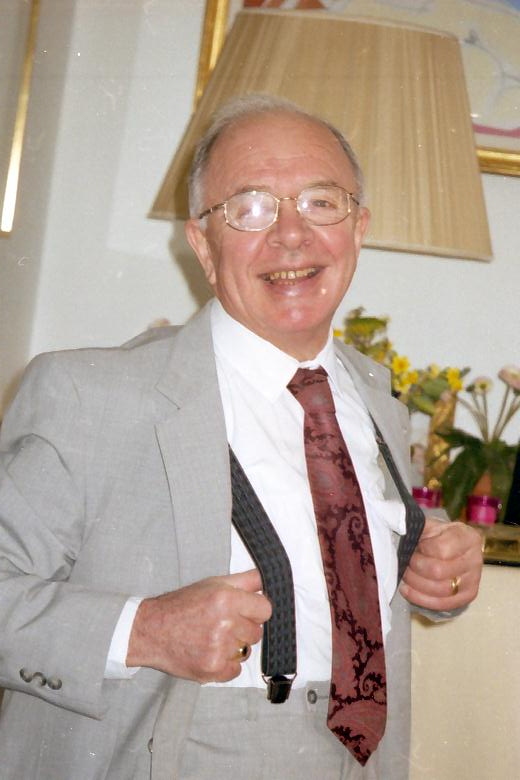
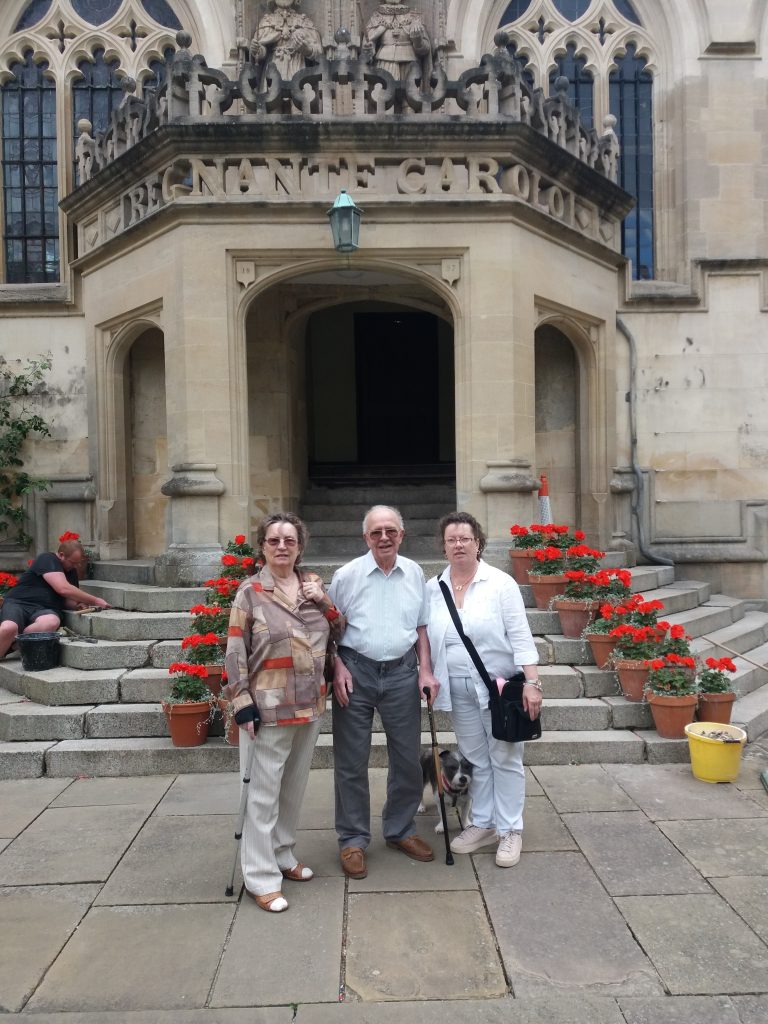
The sad news of Tony Beard’s passing has reached the club.
Tony, a keen sportsman, left the school in the early 1950s and embarked on a joinery and building apprenticeship which led to him establishing and running a very successful building company.
Tony was an active member of golf and cricket clubs as well as gaining international representation as a member of the England Shooting Team.
Our thoughts go out to his family and friends.
How The Crypt School guides its students to academic excellence
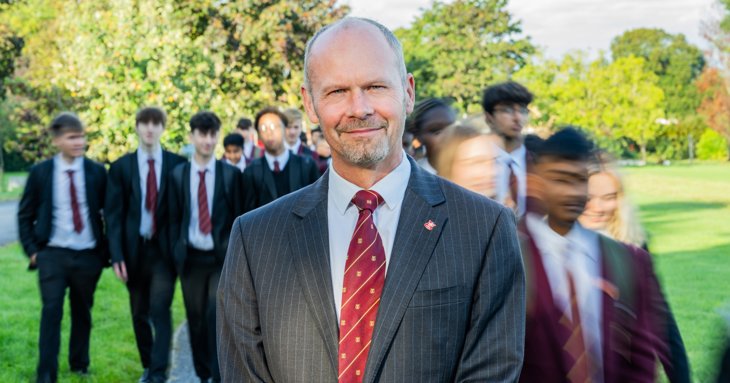
From its ‘teach to the top’ approach in the classroom, to its network of academic and pastoral support structures outside of it, SoGlos sits down with the head of The Crypt School in Gloucester, Nick Dyer, to find out how the school helps its students to flourish academically, with a view to each student getting the best possible start onto their chosen career pathway.
The Crypt School’s headmaster, Nick Dyer, tells SoGlos how the school’s thorough support and guidance helps its students achieve academic success and identify the right career path.
The Crypt School is a co-educational grammar school in Gloucester, which welcomes students aged 11 to 18. It has an excellent academic reputation, an impressive extra-curricular programme and an environment of strong pastoral care to help its students achieve their full potential.
With an approach that puts emphasis on encouraging students to use their newly acquired knowledge to answer challenging questions, The Crypt School in Gloucester has an excellent record of guiding its young people to academic success.
SoGlos talks with the school’s head, Nick Dyer, about how the school helps students to thrive in their studies, from its approach inside the classroom, to extra support outside of it, and how it helps to prepare students for their future careers in an ever-changing landscape.
Tell us about The Crypt School’s academic record.
As a selective grammar school, students come to us with high academic ability to begin with. That’s, of course, a strong advantage in terms of their potential to succeed in their learning journeys; however, as a school we’ve got to work hard to make sure that they do indeed make that exceptional progress that they are capable of across the full range of academic subjects that they study.
Over recent years, the attainment of our groups in their GCSEs and other exams has further strengthened. For example, outcomes in modern foreign languages have improved significantly, and the school is now one of the best performing schools regionally in those subjects at GCSE.
Science and mathematics have always been great strengths of the school, but we also see students do extremely well in the humanities – history, geography and religious education – and in the creative arts – music, drama and art, for example. Many of our students also excel in and enjoy studying computing, English and more practical subjects such as sports science and food technology.
We’re fortunate to have very able students at the school, but we work hard to enable them to achieve ‘value added’ in the progress they make over the course of their studies with us.
What approach does the school take to supporting students to succeed academically, in the classroom?
We have very clear expectations of what our student’s learning is going to look like, in terms of the curriculum, but also of what we want them to achieve at key ‘end points’ across the year.
Our approach is to teach to the top, setting high academic expectations for all of our learners to aspire to. However, we provide extra support to those who find the work more challenging at times, which is really important, but we also take away that ‘scaffolding’ over time, enabling students to reach those high grades and make excellent progress in their work.
We put a lot of focus on questioning – not accepting the first answer given, but asking the students to dig deeper, to think more critically, with skilled teachers bouncing students’ ideas around the room to involve a wider group.
Ultimately, we want to equip our students with the knowledge they need to answer challenging questions, and to ultimately make evidence based judgments of their own. We do have a knowledge rich curriculum here at The Crypt School, but one that seeks to place critical thinking and the development of skills such as oracy at its centre.
We also want our students to increasingly become independent learners – but students do need to learn how to become more independent in both their work and learning. We have a strong focus on students all developing a growing sense of personal ownership of their progress, and of their work, and that is also a key feature of our sixth form curriculum and approach to learning: that’s about preparing our senior students for university study and the world of work, where they will have to operate independently.
We have a strong and deep rooted culture of celebrating and valuing each student’s progress and achievement here at Crypt which shapes our learning environment; with able and committed learners, and expert subject specialists, supported by a talented team of professional support staff, it’s no surprise our students really excel in their learning.
And of course, those students who have special educational needs are given the support and encouragement they need to excel in their learning and progress, too.
What does that extra support look like for students?
We offer a lot of academic support outside of lessons at lunchtime and after school, particularly in the form of revision sessions for exam students.
We might also identify that a student has challenges with handwriting, there might be students whose literacy skills aren’t as good as we would hope, for example, and they would be identified for extra support.
Beyond academic support, we also have an outstanding pastoral system here at the school. Students can find the challenge of their school work quite hard, and they need that extra support from a wellbeing perspective.
I think the success that we have as the school is founded on the care that we offer to students, built around our inclusive and kind culture. Whether it’s our counsellors, pastoral support workers, tutors or heads of year, the students know that if they are facing challenges – be they academic or pastoral – there’s someone they can go to for support and guidance. That’s really important and I think it’s something the students really appreciate.
How does The Crypt support students to pursue their desired career pathways post-school, whether that’s university, an apprenticeship, or full-time employment?
The careers landscape is ever changing, isn’t it? It’s challenging for us to know what that landscape is going to look like for the current Year 7, for example, when they go into the workforce in seven to 10 years’ time.
However, we do have a very thorough careers education guidance programme, that begins in Year 7 and strengthens through to the sixth form. That includes work experience in Year 10 and Year 12; lots of employer engagement activities; an annual careers fair; and we also have an independent careers advisor. All of that is led by our careers leader, who has a full network of contacts drawn from our parental body, our Old Cryptian network and others who want to give up some of their time to support our programme.
We don’t just concentrate on university – 75 per cent of our Year 13s will go to university, but there’s a significant group who are actively seeking apprenticeships and degree apprenticeship opportunities. Over the last few years, we’ve increased our support for those who want to look at apprenticeships, running workshops and replicating employer-led assessment days. There’s plenty of support for writing UCAS applications, CVs, or application letters, too.
Our main aim in the lower years is to give students an idea of the kind of careers that might be available to them, both now and in the future. We utilise labour market information, using a platform where students can record their personal achievements on, but also use it to research what careers are out there, how many jobs are available in the Gloucestershire area, what are the salary expectations and what skills and qualifications they would need to access that kind of career pathway.
What’s really fundamental, too, is the skills and personal qualities that each student is able to develop over their education at the school. If you can communicate well, that will always be something in demand. If you are resilient, there will always be challenges that you will face and can overcome. So, while knowledge and qualifications remain important, alongside that, our young people need those ‘softer’ skills that employers look for.
We know that our careers guidance programme is exceptional – that is what Ofsted said when they inspected the school in March 2024. We have also just had an external audit of our career programme by a company called Careers Mark – we gained their Careers Mark Award three years ago, and we’re aiming to have our programme re-accredited this month.
Of course, the labour market is in a time of great change: technology and AI in particular are reshaping how people work, and where they work. It is also going to profoundly affect what roles are going to increase in demand, what new roles will emerge and what roles will also disappear: our careers work in school must therefore remain relevant and future focussed.
And finally, how does The Crypt School balance academic learning with enrichment activities, and why is that important?
Academic learning is central to what we do here, but students want to engage with lots of other things, too. And it’s really important they do that, and through that develop their communication skills, ability to work in teams, to become leaders as well – but our programme is also about each student having fun and building friendships.
When they leave school and look back upon their school lives in years to come, they often remember those times where they played in a team or went on a trip; took part in a debate, sung in the Cathedral or led one of our clubs or societies; acted in a play or led their House in an assembly – we have a huge programme of extracurricular and enrichment activities here at Crypt – something for everyone to engage with and grow through their participation in.
Our enrichment programme and school culture is also underpinned by our house system which offers lots of opportunities for leadership and for fun, which helps all our students develop a stronger sense of belonging to their school. Our senior students also take on leadership roles as prefects, members of our sixth form student executive team, head boy and head girl. We also have our three school parliaments, which although are focused on important aspects of school life, provide opportunities for students to engage in debate and have their say, so they feel a sense of ownership and belonging to the life and work of the school.
Our programme builds culture, it enables friendships to flourish, and it helps the students to manage their other challenges – the workload, the expectations that they will do well academically and wider concerns that I think young people have today about our society. It’s a release from all of that and really good for their wellbeing and mental health. So it’s a fundamental part of our curriculum.
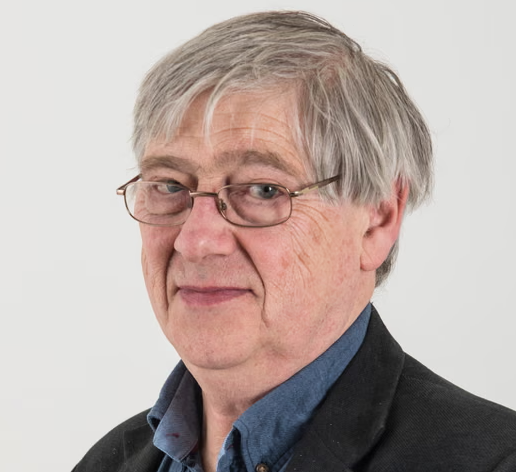
The Club are saddened to learn of the death of former pupil Andrew Clements.
The following obituary has been extracted from The Guardian.
Andrew Clements, who has died aged 75 after a period of ill health, was for more than three decades the Guardian’s chief classical music critic. His style was a model of critical integrity – authoritative and intelligent, sometimes enthusiastic and sometimes slightly grumpy, dry-humoured yet never showy.
Music may say things that words cannot express, but he mastered the rare art of putting music into words, always using language with precision; reading him, you knew what a performance had sounded like. Best known for championing new music with tireless devotion, Andrew had much wider musical interests than many realised.
However, music was only one of his passions. Topping the list of other fascinations were natural history and Latin American literature, and these strands all came together when he reviewed the world premiere of Peter Eötvös’s opera Love and Other Demons – based on Gabriel García Márquez – at Glyndebourne in summer 2008. Welcoming the work, Andrew ended his review by saying that only the production disappointed “for its failure to evoke any real sense of place, despite the lavish use of video projections full of writhing bodies, insects and reptiles; someone might have pointed out to [the director] that there are no chameleons in South America”.
With such wide interests, Andrew could have taken several professional paths but worked in music journalism – at times as an editor as well as writer – almost all his adult life. But his first job after graduating was in the editorial department of the Open University, where he met Kate (Kathryn) Coltman. They married, and had two daughters, Lara and Holly; they separated in the 1990s.
Andrew served as music critic of the New Statesman for 11 years from 1977, also contributing to Time Out. He had a brief spell (1987-88) as editor of the Musical Times, and wrote for many years (1979-93) for the Financial Times, not only on classical music but also as the paper’s rock and pop critic. Later, in a Guardian classical review he would say that Brian Wilson’s God Only Knows was still the most perfect pop song.
Overlapping with his writing, Andrew was commissioning editor for books on music at Faber & Faber (the publisher’s connection to poets and poetry was not lost on him), midwifing several significant titles. He first wrote for Opera magazine in 1983 and joined its editorial board in 1990. When he succeeded Edward Greenfield on the Guardian in August 1993, the appointment was clinched at least in part by a recommendation from the pianist Alfred Brendel.
He also had a fondness for the English pastoralist composers of the early- and mid-20th century, and indeed had grown up in Hucclecote, a village that has become a suburb of Gloucester. His mother, Linda, a domestic science teacher before her marriage, was from the Forest of Dean; his father, Joseph, who had grown up on a small family farm in Down Hatherley, to the north of Gloucester, made aeroplane parts for Dowty Aviation.
An only child, Andrew attended The Crypt school, a grammar in Gloucester, and was the first member of his family to go to university. He studied theoretical physics at Emmanuel College, Cambridge, and played the flute in a university orchestra. Contemporaries remember him as a little unsocial and enigmatic – qualities that later allowed him to maintain a professional distance and to write without fear or favour.
With such a background, Andrew was well placed to attend the Cheltenham music festival during its vintage years, and also the Three Choirs festival; this was his first musical landscape, and Elgar’s Dream of Gerontius held special appeal. He would remain more committed than most critics to covering the regional scene.
In 1992 he became a director of the Holst Foundation, honouring the Cheltenham-born composer, and the poetry of Ivor Gurney meant a great deal to him. Reading the Guardian’s Country Diary was a daily ritual (as was doing the paper’s Cryptic Crossword).
Music was not in the family, but his parents had been keen gardeners and lovers of the countryside. Andrew started collecting plants as a boy and was soon ordering Bhutan alpine seeds and indexing specimens. Birds, amphibians and reptiles were special interests, and he kept many creatures as pets – on one occasion, some burglars are said to have been frightened off by his poison dart frogs.
A holiday in Crete in 1979 – his first trip abroad – made a huge impression on him, and Greece would remain one of his favourite countries for the rest of his life. Bird-watching took him the length of South America, from Costa Rica to Ecuador and the Amazon to Patagonia. This he often did with his partner Amanda Holden, the opera librettist and translator, with whom he lived in London for several years. She died in 2021.
Andrew, who I was lucky to count as a colleague and friend for three decades, contributed to The New Grove Dictionary of Music, The New Grove Dictionary of Opera and The New Penguin Opera Guide. He wrote a compact account of the composer Mark-Anthony Turnage (2000). In opera, he responded not just musically but had a strong sense of theatre.
Pianists and the piano literature were close to his heart, and his penultimate review for the Guardian, of previously unpublished recordings by Radu Lupu, had a valedictory feel: “Of the many hundreds of pianists I must have heard in more than 50 years of recital going, a multitude that has included many of the greatest names of the 20th century, none gave me more consistent pleasure or a greater sense of wonder.”
An illness starting in early 2025 meant that Andrew’s last concert review (of the Dunedin Consort) appeared in early March. Despite these difficulties, he retained the sense of humour that countered an often gruff exterior. From his home in Oxfordshire he continued reviewing recordings; his final piece, about Nadia Boulanger’s opera La Ville Morte, was written just before Christmas and published at the start of January, by which time he had contracted the flu that led to his death.
Kate survives him, along with Lara, Holly and two grandchildren.
Andrew Joseph Clements, music critic, born 15 September 1950; died 11 January 202
The club is sad to announce the passing of former President, Ian Williamson. He died surrounded by his family after a short illness on the 27th December in Salisbury hospital in Wiltshire.
The club has sent its condolences to his wife, Patricia, and his wider family.
Dear Members, It’s my pleasure to invite you to this year’s reunion dinner at The Crypt School on Saturday March 21st. It’ll be held in the crush hall which is a wonderful and intimate setting. Not only do we have a great guest speaker but we’ll also finally be announcing our proposals for the future of the club. The price will be £35 for members and £38 for non-members. However for members who book before February 16th we’re offering an early-bird price of £32.50!
The menu is:
Starter: Slow Braised Ham Hock Terrine served with Sourdough Bread and Piccalilli Mains: Steak and Ale Shortcrust Pie Served Buttery Mashed Potato and Rich Gravy Dessert: Chocolate and Black Cherry Roulade Served with Pouring Cream Vegetarian option available on request
Our guest speaker this year will be Crypt alumnus, my former colleague and predecessor in the BBC, Graham Gardner. Graham has had a distinguished career in journalism from local newspapers to Severn Sound, BBC Radio Gloucestershire and then BBC Points West as the Gloucestershire reporter. He was high profile in the BBC’s coverage of the Cromwell Street murders after which he also authored a book with the senior investigating officer. Graham has never spoken publicly about his career before and I’m proud that he’s chosen his former school and my year as OCC President to do it.
As also mentioned above I’m also very excited that we’ll be announcing the committee’s proposals about the future of the club at the AGM on the 21st. In reality its taken us over three years to get to this point but we’re now in a position where we have a firm plan to reinvigorate the club and look to the future with some positivity. We won’t be announcing this generally to all members until the end of March so if you want to hear it first from me and the committee then the AGM and dinner is the place to be. I’m sure it will prompt some good discussions over dinner.
Please do book your tickets as soon as possible, take advantage of the early-bird offer, and encourage your peers and school mates to join us. As we embark on a new era of the club it would be wonderful to see as many people there as possible. We’ll be starting things a little earlier than usual with the AGM at 5.30pm, drinks at 6 and dinner at 6.30pm.
The OCC is saddened to hear the news of the passing of former club secretary, Eric Kennett.
Eric passed away at the age of 94 peacefully in his sleep after a short illness in the early hours of Friday 12th December 2025 at the Edgehill Care Home in Swindon. He had been visited by many of his family in the previous hours who are all greatly saddened by his passing.
Eric served for 7 years as Secretary of the Old Cryptians’ Club and he still treasured the tankard presented to him upon his departure to a new position at Warwick School.
A great life well lived,
Graduated from Oriel College Oxford 1950-53
For almost 40 years he taught French & German Language & Literature at:
Bridlington School 1953 – 1968
Head of Department at Crypt School Gloucester, 1968-1977
Head of Department at Warwick School 1977-1990
and like many teachers he also taught other subjects including P.E. Geography and History.
An active man for most of his life, he excelled at most activities including Rock Climbing (he climbed the Alps) Cycling, Golf, a Rugby referee and until his late 80’s regularly walked 7 or 8 miles around the Lower Quinton Villages. He was a keen Photographer, Painter, Woodworker and Gardener (He even grew his own pipe tobacco)
He was a very religious man and a very active member of St. Swithins Church Lower Quinton, serving as Church Warden and a regular reader.
A new exhibition about a poem written by a Gloucester-born writer has opened.
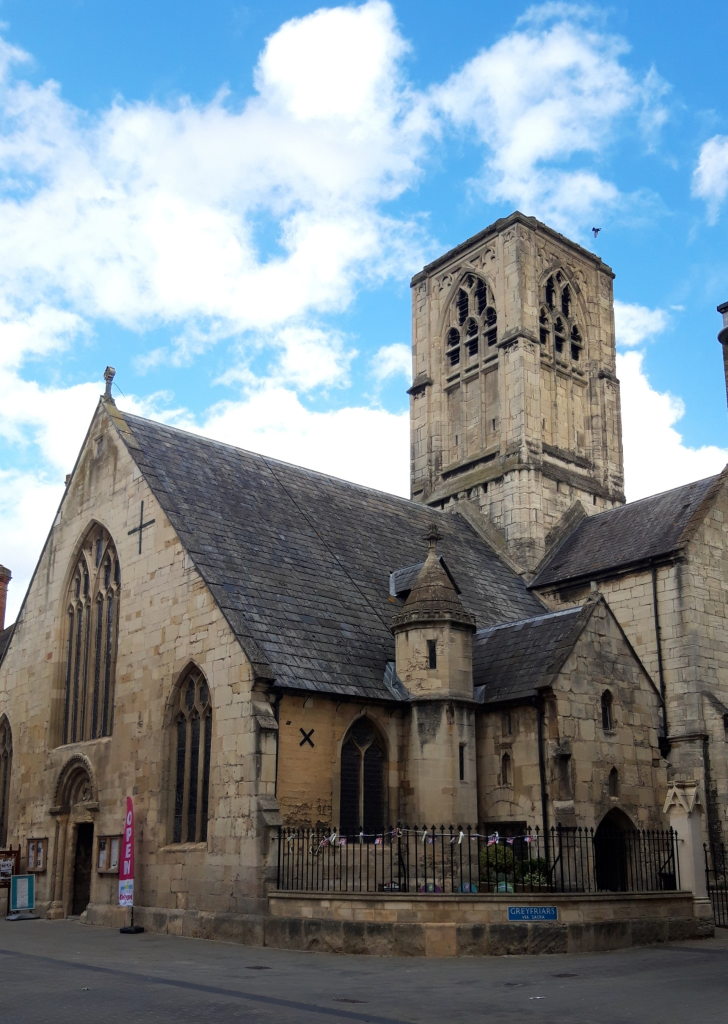
The exhibition, at St Mary de Crypt in Southgate Street in the city centre, tells the story of the poem ‘Invictus’ by William Ernest Henley and how it has had a major impact across the world.
The poem was written in 1875, so this year marks its 150th anniversary. The exhibition has been put together by history students from The Crypt School, which Henley attended and which was founded at St Mary de Crypt, in conjunction with the Friends of St Mary de Crypt.
Most famously, Invictus was read daily by Nelson Mandela while he was in captivity but it has also been quoted from at different times by major figures including Winston Churchill and Barack Obama. It was also the inspiration for Prince Harry’s Invictus Games for injured service personnel and for the 2009 film about South Africa winning the 1995 Rugby World Cup.
Paul James, Chair of the Friends of St Mary de Crypt, said, “We are very grateful to the students and staff at The Crypt School for putting this exhibition together. It is remarkable just how much influence Invictus has had on events around the world and we should be proud that its roots are here in Gloucester.”
James Higgs, Head of History and Politics at The Crypt School, said: “Our students have relished the opportunity to research, collaborate & present their ideas on William Henley and his poetry. They have enjoyed seeing the myriad of ways it has influenced figures way beyond Gloucestershire, and throughout the world. Henley’s themes of resilience and inner strength are all incredibly relevant to our students today.
The exhibition is free to view and St Mary de Crypt is open Wednesday-Saturday from 11am-3pm (except the morning of Wednesday 19th November when it will be closed due to a theatrical production). The exhibition will run until the end of the year.
INVICTUS
Out of the night that covers me, Black as the pit from pole to pole, I thank whatever gods may be For my unconquerable soul. In the fell clutch of circumstance I have not winced nor cried aloud. Under the bludgeonings of chance My head is bloody, but unbowed. Beyond this place of wrath and tears Looms but the Horror of the shade, And yet the menace of the years Finds and shall find me unafraid. It matters not how strait the gate, How charged with punishments the scroll, I am the master of my fate, I am the captain of my soul.
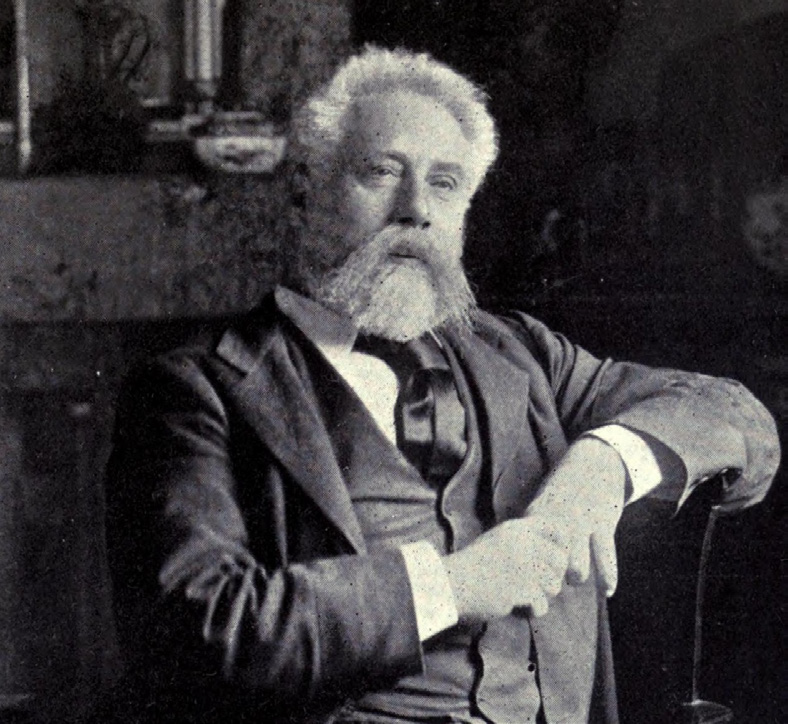
William Ernest Henley 1849 – 1903 Born on Eastgate Street, Gloucester, Crypt School alumnus, William Ernest Henley, went on to become a celebrated poet, writer and literary critic. He was moved to write the 1875 poem, ‘Invictus’, whilst recovering from surgery to save his remaining leg, having lost one when he was 16 to complications arising from tuberculosis. Evoking the indefatigable spirit, self discipline and fortitude in adversity, Invictus has inspired many and was quoted at different times by leaders including Sir Winston Churchill and Barack Obama. Whilst incarcerated at Robben Island prison, Nelson Mandela recited the poem to other prisoners and was empowered by its message of self-mastery. He was forever linked to ‘Invictus’ when his early presidency of South Africa and the 1995 Rugby World Cup triumph were immortalised by the 2009 film of the same name.
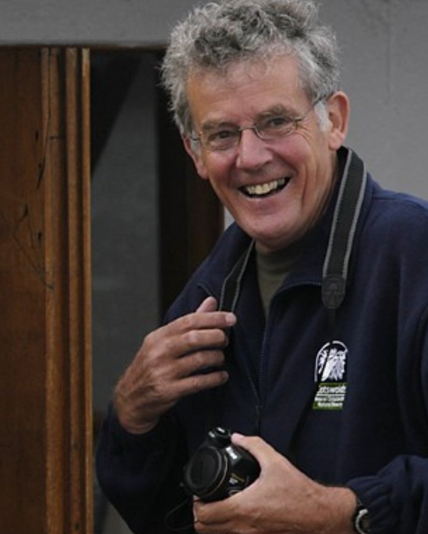
The Club is saddened to learn of the passing of Richard Lloyd on October 4th 2025. Our thoughts are with his family and friends.
Richard Lloyd was born in Gloucester and attended the Crypt School. After university, which included a First and two London M.Phils (M.Phil and Bar, he called them), he spent his whole career working for the environment, with his first post as an ecologist with the then Lindsey County Council.
A move to the Countryside Commission in London in the 1970s included policy and research work. Soon after the Commission’s move to Cheltenham – and still at a very young age – he was appointed as the Commission’s Regional Officer for the South West. A visit to Richard’s Bristol Office and his small, lively team was always a cheery experience. Later, back in the Cheltenham HQ, Richard energetically headed Countryside Commission policy units covering, variously, land-use planning, designated landscapes, and agriculture. From there it was a seamless move into CPRE. In retirement, and by then with an MBE for his environmental work, he was appointed by the Secretary of State to the Board of the Cotswolds AONB. Again, he made an impact as one of the more active and supportive Board members.
There is a full obituary on the CPRE website and a interview on the BBC Gloucestershire you tube channel below.
Sad to announce the passing of Michael Jones, a Gloucester lad who became a respected journalist and political commentator.
Michael was the first son of Glyn & Betty Jones. Some may remember Glyn who went into business with his Brother in Law Les Browett opening a betting shop ’Jones and Browett’ close to the Wagon Works and Morelands Match Manufactory on the Stroud Road. Peter, Michael’s younger brother worked for many years at Impregnated Diamond Products in Gloucester and continues to live in the city.
Michael was born in about 1937 and attended the Crypt School between 1948 – 1956. I believe Michael’s first steps saw him in a lowly job at the Citizen/Gloucester Journal in the late 50s where he worked his way up and from where eventually he joined the then Manchester Guardian. As a respected journalist he later worked in Hong Kong and also on The Times, Daily Telegraph and Financial Times. He retired as Associate Editor (Politics) of the Sunday Times in 2002. Thereafter he worked closely with Betty Boothroyd on her autobiography. For many years he lived with his wife Sheila in Orpington where their own family grew up. Michael was a much older cousin of mine and a fascinating chap to talk with. RIP.
Originally posted by Chris Coopey in the “Gloucester: A trip back in time” Facebook page